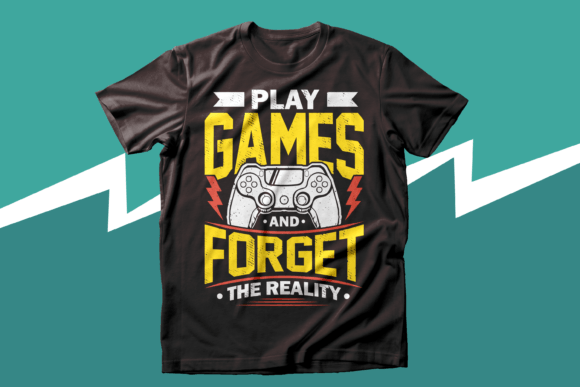
Play Games Forget the Reality T-shirt
In an era where digital escapism intersects with tangible self-expression, apparel graphics carry more weight than ever. The Play Games Forget the Reality t-shirt design taps into a shared cultural moment—gaming as a respite from daily pressures. This article examines the digital asset behind that message, a fully developed vector graphic built specifically for screen printing and digital printing workflows. It is not just a catchy phrase; it is a production-ready file designed to streamline the merchandise creation process for entrepreneurs, content creators, print shops, and small brands.
What sets this design apart is its deliberate separation from half-baked clip art. Every element has been structured with output in mind. The file arrives clean, organized, and built to scale across multiple print technologies. Whether you are launching a limited apparel drop or expanding an existing gaming lifestyle brand, the asset’s foundation matters. Here, the emphasis is on technical soundness, editing freedom, and reproduction consistency—factors that can make or break a printed product.
Understanding the Core Asset and Its Intended Purpose
At its heart, this is a typographic and illustrative composition that communicates a relatable sentiment: the desire to disconnect from stress through interactive entertainment. The phrase Play games and forget the reality resonates with casual gamers, competitive players, and anyone who uses gaming as a mental reset. When translated to wearable merchandise, it becomes a conversation starter and an identity marker.
The design is not tied to a single platform or gaming niche. Its broad appeal suits retro gamers, PC enthusiasts, console players, and even tabletop hobbyists who appreciate digital culture. Because the graphic arrives as an editable vector, the message can be paired with custom colorways, background textures, or additional typography without degrading image quality. This adaptability is essential for brands looking to maintain visual consistency across multiple products, from cotton tees to hoodies, mugs, or posters.
Practical value lies in the time saved. Designing from scratch, testing print alignment, and preparing color separations can consume days. A pre-tested, well-organized file reduces that friction. The collection includes AI, EPS, and high-resolution PNG formats, covering both vector editing and direct-to-garment placement. This package style caters to professionals who expect a seamless handoff between design software and printing hardware.
What Makes the Design Production-Ready
Delving into the specifications, the Play Games Forget the Reality t-shirt design is delivered at a robust 4500 by 5400 pixel dimension. This resolution provides enough density for crisp output even on larger print areas, such as full-back placements or oversized front prints. More importantly, the file architecture remains 100% vector at its core. That means the design can be scaled to billboard size or shrunk to a pocket print without introducing pixelation or jagged edges.
Color management is fully in the user’s hands. Every element can be recolored, adjusted, or separated with standard vector editing tools. This is critical for screen printers who need to isolate colors for individual screens, or for digital printers who must adhere to specific fabric color limitations. The lack of locked layers or flattened artwork preserves complete creative control. For apparel decorators who often receive flattened JPGs from clients, receiving a truly editable file eliminates the common headache of unintended halftone artifacts or low-contrast details.
Another often overlooked strength is file organization. The artwork comes with logically named layers and grouped elements. This may seem minor, but in a production environment, hunting through dozens of unnamed paths wastes billable hours. A well-organized file lets the user quickly modify line weights, adjust spacing, or isolate the text block for use on a different product. The structure also aids in adding trademark symbols, slogans, or event dates while keeping the original composition intact.
Performance Across Screen Printing and Digital Methods
Screen printing demands precise registration, solid color areas, and clean edges. The vector nature of this design supports spot color separation with ease. Printers can generate underbases and highlight white layers without manual tracing. Because the graphic does not rely on complex gradients or photographic elements, it translates cleanly onto both light and dark garments using standard plastisol or water-based inks.
For direct-to-garment (DTG) and direct-to-film (DTF) transfers, the included high-resolution PNG serves as an instant drag-and-drop asset. The file transparency is properly configured, avoiding the muddy edges that plague poorly exported raster images. While the PNG lacks the infinite scalability of the vector formats, the 4500px width provides enough real-world resolution for prints up to approximately 15 inches across on a standard 300 DPI output, which comfortably covers adult t-shirt sizes from small to 3XL without quality loss.
Sublimation printing and heat transfer vinyl (HTV) workflows also benefit from the clean linework. Sublimation papers reproduce the design with sharp contrast, especially when the user adjusts colors to pop on polyester fabrics. For crafters using cutting machines, the vector paths can be exported as SVG for contour cutting, expanding the design’s use beyond apparel into decals, signs, and hard goods.
Flexibility in Branding and Multi-Product Use
Owning a single design that can pivot across merchandise categories increases return on investment. A gamer-themed online store might feature this graphic on crewnecks, phone cases, throw pillows, or canvas prints. Because the visual identity remains consistent while adapting to product dimensions, the brand narrative becomes stronger. The editable text also permits localization—changing “reality” to a synonymous phrase or translating it entirely for non-English markets without re-illustrating the main artwork.
Custom color adaptability is another professional advantage. A dark mode version with neon accents appeals to cyberpunk enthusiasts, while a muted pastel version suits an everyday casual wear line. Some print-on-demand platforms restrict the number of colors in a design to keep costs flat. Having the ability to quickly merge shades or simplify a palette directly inside Illustrator keeps the design viable across budget tiers, from premium boutique runs to economy bulk orders.
The file also supports adding distressing effects, halftone overlays, or background shapes for a vintage arcade look. Savvy designers often take a clean base like this and apply texture filters through linked graphics or transparent masks. Because the source artwork stays unflattened, these enhancements remain non-destructive and easily reversed.
Who Gains the Most from This Design Asset
This graphic serves a distinct range of users, each with different expectations and technical demands:
- Independent streetwear labels launching gaming culture capsules. They need bold, copyright-safe graphics that print cleanly on cut-and-sew pieces.
- Streamers and content creators building personal brands. A unique t-shirt design fosters community identity and provides a merch revenue stream without commissioning custom illustration.
- Print-on-demand entrepreneurs testing gaming niches. The design reduces upfront risk since the file is ready to upload to platforms like Printful, Printify, or Gelato immediately.
- Screen print shops offering retail customers a catalog of pre-made designs. Adding this gamer-themed option expands their portfolio without in-house art hours.
- Event organizers for esports tournaments, LAN parties, or gaming conventions. A unifying graphic for staff shirts or attendee giveaways that can be recolored for different roles.
Educators and workshop facilitators might also use the file in courses that teach vector preparation, color separation, or print file setup. The clear structure of the AI and EPS files makes them useful teaching aids without the mess of poorly constructed student examples.
Professional Observations on Quality and Consistency
Examining the line quality, the typography shows consistent stroke weights and kerning that does not break apart when scaled. Letter connections feel intentional, and any illustrative icons within the composition maintain visual balance with the text. Sloppy curves or mismatched corner radii are absent, which is a common indicator of auto-traced artwork. Instead, the anchor points appear manually optimized, minimizing print anomalies on mesh screens.
From a reliability standpoint, buying a downloadable digital asset carries inherent concerns—file corruption, missing fonts, or unsupported color profiles. This package mitigates those risks by including both EPS and AI formats, essentially one open standard and one native editing format. The PNG acts as a dependable fallback for quick mockups. While the listing does not explicitly mention font licensing, vector text is typically outlined in such deliveries. Outlined text ensures that no font substitution errors occur when the file is opened on different systems. Users should verify this upon receipt, but reputable preparations follow this convention.
Long-term value comes from the design’s evergreen theme. Gamer culture is not a fleeting micro-trend. The desire to escape into virtual worlds has been a constant for decades. While specific game references risk dating themselves, the generalized message here remains relevant. The asset can sit in a digital library for years and still feel timely when pulled for a campaign, especially when color trends are updated.
Potential Limitations and Considerations
No design asset fits every scenario. The straightforward typographic style, while highly legible, may not appeal to buyers seeking painterly illustrations or hyper-detailed character art. It fills a specific niche—bold, message-driven merchandise—rather than competing with complex fantasy scenes. Brands that rely solely on intricate cover art may find this too minimal.
Another aspect is the required software fluency. To unlock full editing capabilities, the user needs a vector editing application such as Adobe Illustrator, Affinity Designer, or CorelDRAW. Those operating entirely on Canva or basic photo editors will be limited to the PNG file. While the PNG is serviceable for many print-on-demand tools, true customization demands vector skills. This is not a flaw of the product but a realistic prerequisite that prospective buyers should acknowledge.
For screen printers working with a limited number of screen heads, the design may require careful color reduction if the original palette exceeds their press capacity. Although the editing tools enable this, a novice might struggle with selecting overlapping shapes to merge into a single spot color. Some print shops might wish for an accompanying color-separated version with predefined spot colors to further speed up production. That additional step remains in the user’s hands but is feasible with basic Illustrator knowledge.
Pricing and licensing structure also matter for commercial use. Most digital design files of this type come with a standard commercial license allowing unlimited prints for sale, but exclusive rights are rarely included at base price. Entrepreneurs aiming for a unique, trademarkable brand identity should understand that other sellers may use the same graphic. Differentiating through unique garment choices, branding, packaging, and supplemental designs turns this into a building block rather than a final destination. Some may choose to modify the artwork significantly enough to create a derivative work that is distinctly theirs, leveraging the editable features to that end.
Integrating the Design into a Cohesive Product Strategy
The most effective way to deploy a graphic like Play Games Forget the Reality is as part of a broader collection. Pair it with complementary designs that share a common aesthetic—perhaps a controller illustration, joystick icons, or retro pixel elements. This creates a world around the message, encouraging multiple purchases. A cohesive lookbook elevates the perceived quality of the brand and gives customers a reason to return.
Mockup generation is another practical step before going to press. Because the included PNG has a transparent background, dropping it onto high-quality apparel mockups via Photoshop or online tools allows store owners to test colorways and shirt styles without physical samples. This virtual validation saves money and helps in creating effective product photography for e-commerce listings. The 4500px width ensures that the mockup remains crisp even when zoomed in for detail shots.
From a marketing perspective, the message itself—play games and forget the reality—offers ample copywriting angles. It can be positioned as a mental health-positive statement about taking breaks, a humorous nod to adulting fatigue, or an unapologetic gamer badge. The language is broad enough to avoid alienating non-gamers who appreciate the escape concept, widening the potential audience slightly.
Final Thoughts on Practical Implementation
The Play Games Forget the Reality T-shirt design file prioritizes utility over spectacle. It provides a solid, clean, and flexible foundation for anyone serious about producing wearable goods without reinventing the art process each time. The vector editability and high-resolution PNG combination cover the majority of production workflows, from manual screen shops pushing high-volume orders to solo entrepreneurs using print-on-demand fulfillment.
Choosing such a resource comes down to alignment with specific goals. If the priority is a fast, polished, technically sound graphic that resonates with the gaming community, this asset delivers. It removes technical guesswork while preserving creative freedom. The well-structured files, thoughtful scalability, and print-specific construction make it a dependable addition to a merchandiser’s toolkit. As with any pre-made design, the real value emerges when the user infuses it with their unique brand voice, color choices, and product context, transforming a single graphic into a lasting commercial piece.